Peanut Butter Machine Manufacturer in Tanzania
Complete peanut butter processing machinery for Tanzanian food processors — roasters, blanchers, grinders and filling systems in food-grade stainless steel, engineered for 400V 50Hz supply and shipped to Dar es Salaam.
- Power
- 400V 3-phase, 50Hz — no conversion
- Capacity
- 100 – 1,000+ kg/day
- Construction
- SS304 standard, SS316 optional
- Port Served
- Dar es Salaam
- Sea Transit
- ~18 – 26 days from Mundra
- Build Time
- 2 – 4 weeks before dispatch
Peanut Butter Machines
Built for Tanzania
Tanzania is one of Africa’s larger groundnut producers, with the crop concentrated across Dodoma, Tabora, Mtwara, Ruvuma and Singida. Most of it still moves as raw kernels through informal trade, and the processing margin leaves the country with it. Tanzanian food businesses building branded peanut butter capacity are capturing that margin domestically — and, through East African Community access, across the wider region.
Shrijee Nut Company manufactures the machinery that conversion runs on. We have built peanut and nut processing equipment in Rajkot, Gujarat since 2004, with more than 500 machine installations and over 100 turnkey plant projects delivered. We export to Tanzania on FOB and CIF terms with the full documentation set your clearing agent needs.
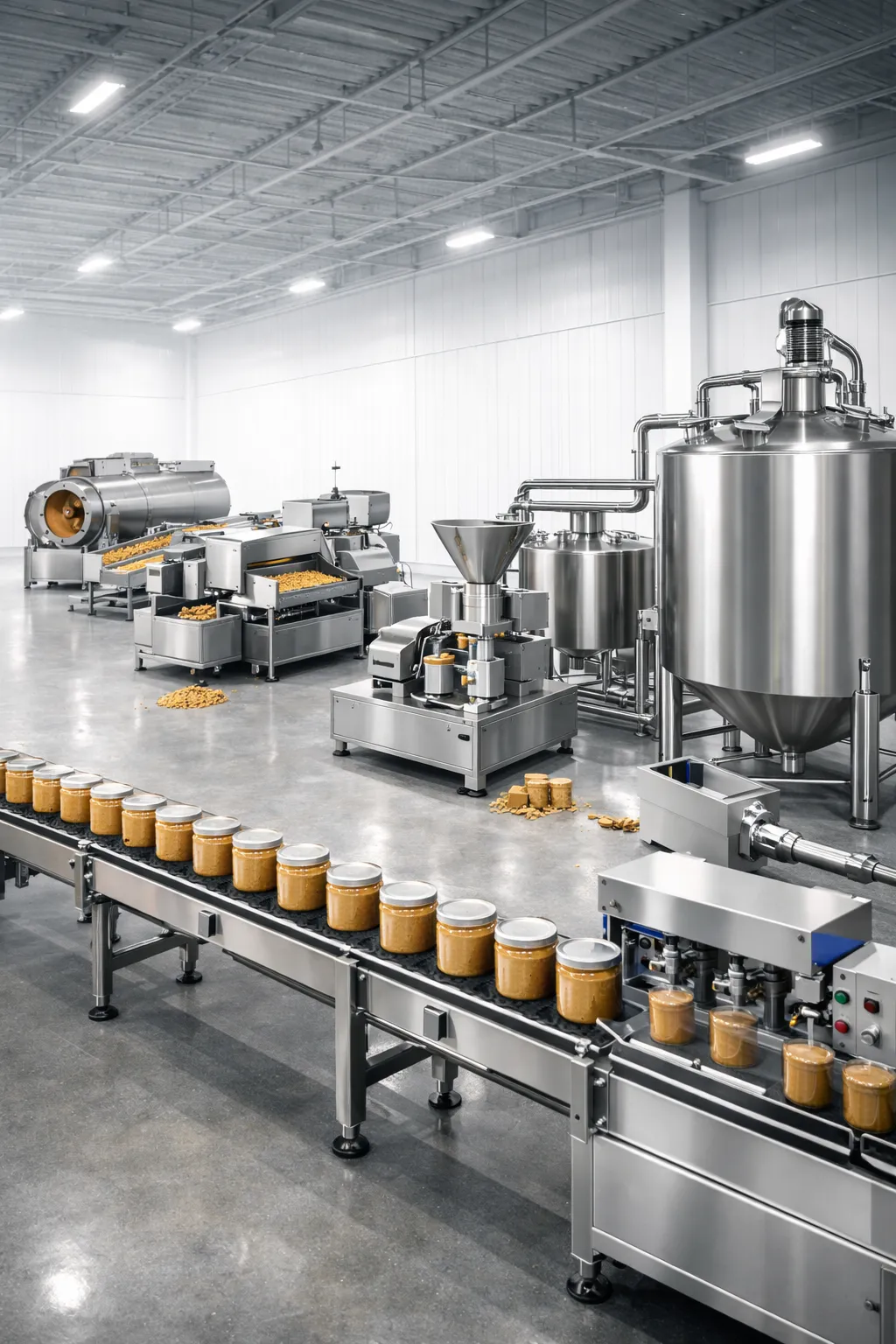
From Raw Groundnut to Filled Jar
Order the full sequence as one integrated package, or individual machines to fill gaps in an existing setup.
Every Machine We Manufacture
Twenty machines across six categories — supplied individually or as a fully integrated line.
Choose Capacity for Your Market
Over-specifying is the most common and most expensive mistake we see. Buy for the demand you can prove, not the demand you hope for.
Starter Line
100–150 kg/dayNew brand serving Dar es Salaam or a single regional market through general trade.
- Manual or compact roasting
- Single-stage grinding
- Manual filling
- Minimal floor space
Growth Line
300–500 kg/dayEstablished brand supplying supermarket chains and institutional buyers nationally.
- Rotary roaster and cooling belt
- Blanching stage included
- Two-stage grinding
- Semi-automatic filling
Industrial Line
1,000+ kg/dayContract manufacturer or exporter serving EAC markets and landlocked neighbours.
- Continuous roasting
- Automated blanching
- In-line filling and labelling
- Bulk storage tanks
Buy for proven demand, not projected demand. Tanzania’s branded peanut butter category is still forming, which means volumes build over quarters rather than months. A 150 kg/day line at 80% utilisation returns more than a 500 kg/day line at 20%, and machines can be added to a layout designed with headroom. Freight, duties, clearing, inland haulage and installation all sit on top of the machinery — plan for them explicitly. See our plant investment guide and automation comparison.
Four Engineering Reasons,
Not Marketing Claims
Electrical Compatibility
Tanzania and India both run 50Hz supply, with 400V three-phase distribution in Tanzania against 415V in India — well inside the tolerance band of our standard motors and control gear. No frequency conversion, no rewind. Machinery built for 60Hz markets cannot make that claim.
Capital Efficiency
Indian-built stainless machinery typically lands well below European equivalents of comparable specification. That matters most when you are financing a first plant rather than replacing an existing line.
Repairable On Site
Our machines use standard-section stainless fabrication, common bearing sizes and widely available motor frames, so a competent Tanzanian fabricator or millwright can maintain them. Equipment only a factory technician can service is a liability at this distance.
Regional Reach
A plant in Tanzania sits on the Dar es Salaam corridor that supplies Zambia, Malawi, Rwanda, Burundi and eastern DRC. Specify packaging flexibility early if regional export is part of the plan — it is far cheaper than retrofitting a filler later.
Importing Machinery into Tanzania
We handle manufacture, pre-dispatch testing, export packing and documentation. Everything on the Tanzanian side is handled by your licensed clearing agent.
Proforma Invoice
We issue a proforma invoice covering the machine list, specification and terms, which your bank and clearing agent work from.
Documentation Pack
We prepare the export documentation set and supply anything further your clearing agent asks for.
Manufacture & Testing
Two to four weeks depending on the configuration ordered, with pre-dispatch testing.
Sea Freight
Mundra or Nhava Sheva to Dar es Salaam, roughly 18–26 days port to port.
Clearance & Delivery
Your licensed clearing agent handles customs formalities, then road transport to site.
Confirm every import requirement with your licensed clearing agent. Conformity assessment, permits and product registration differ by consignment and are revised periodically, so your agent in Tanzania is the authority on what your shipment actually needs. This page is not a compliance reference and we do not advise on it.
Whatever documentation they ask for, we provide. At the time of import we prepare and supply the full set on our side — commercial invoice, packing list, bill of lading, certificate of origin, technical specifications, test records and any further paperwork your agent or the authorities require.
Specified for Tanzanian
Operating Conditions
Machinery specified for a stable industrial supply will disappoint in a plant running on intermittent grid power and generator backup. We account for that when quoting.
Generator-Aware Electrics
Star-delta or soft starters on higher-rated grinding motors, reducing the inrush current that trips generator sets on start-up. A connected-load schedule ships with every quotation so your electrical contractor can size the genset, changeover and stabiliser accurately instead of estimating.
Coastal Humidity
Dar es Salaam humidity affects roasted kernel handling and finished-product shelf life, while inland Dodoma and Singida sites are far drier. Tell us where the plant will sit and we will advise on cooling-belt residence time and sealed storage accordingly.
Spares Held On Site
A recommended spares list ships with the order — grinding stones, bearings, seals and belts. At this distance, holding wear parts on site is the difference between a half-day stoppage and a six-week one.
Groundnut Sourcing Within Tanzania
Tanzania’s groundnut production is concentrated in Dodoma, Tabora, Mtwara, Ruvuma and Singida. For processors based in Dar es Salaam, inbound freight and moisture control during transit are real cost lines that belong in your model from the start, not as an afterthought.
- Moisture drives your roast profile. A stable supplier relationship is worth more to product consistency than a marginally lower kernel price.
- Aflatoxin management starts at intake, not at grinding. Never skip the sorting table and vibratory sieve stage, however tempting the saving looks on the machine list.
- Regional export raises the bar. If EAC buyers are part of the plan, intake screening and documented batch traceability stop being optional.
- Rejecting bad kernels at intake is far cheaper than recalling finished product from the trade.
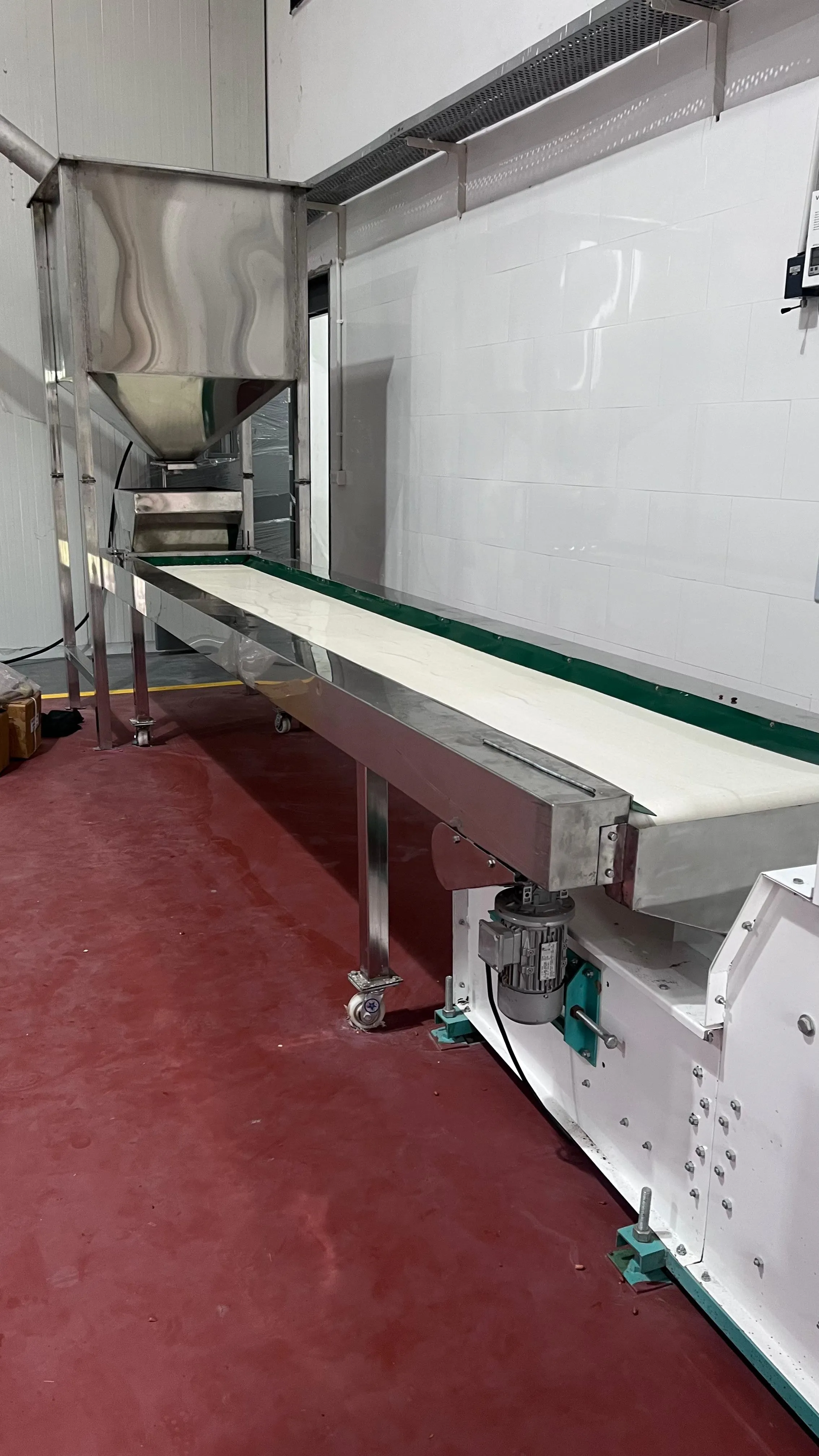
Installation, Commissioning
& Operator Training
Drawings Before Dispatch
Layout, foundation and utility drawings reach you while the machines are still on our floor, so the shed slab, drainage and three-phase run can be finished before the container lands at Dar es Salaam. Sites that wait for the machines to arrive before starting civil work typically lose four to six weeks.
Training Your Operators
Commissioning covers roast profiling against your kernel grade, grinder gap setting for the texture you are selling, and the cleaning cycle. We train your people rather than running the line for them — a plant that depends on a visiting engineer is a plant that stops when he leaves. Engineer deputation is quoted separately; remote commissioning over video is available where a visit is not practical.
Peanut Butter Machines in Tanzania
Yes. We manufacture in Rajkot, Gujarat and export to Tanzania on FOB or CIF terms through Mundra and Nhava Sheva ports, with delivery to Dar es Salaam. We supply the export documentation set your clearing agent needs, including the commercial invoice, packing list, bill of lading and certificate of origin.
Yes. Tanzania runs 50Hz supply with 400V three-phase distribution and 230V single phase. India uses 415V three-phase at the same frequency, which sits inside the tolerance band of our standard motors and control gear — no frequency conversion or rewind. We supply the connected-load schedule with every quotation so you can size your generator and stabiliser correctly.
Most entrants start between 100 and 300 kg per day, which suits Dar es Salaam general trade and regional distribution while keeping capital exposure low. Processors supplying supermarket chains or planning EAC export typically specify 500 to 1,000 kg per day with semi-automatic roasting and automatic filling.
Ask your licensed clearing agent — they are the authority on this, and we deliberately do not advise on it. Conformity assessment, import permits and food-product registration differ by consignment and are revised periodically, so anything we published here could be out of date by the time you ship. What we do commit to is the paperwork on our side: at the time of import we prepare and provide the full documentation set, including the commercial invoice, packing list, bill of lading, certificate of origin, technical specifications and test records, plus any further documents your agent or the authorities request.
Sea freight from Mundra or Nhava Sheva to Dar es Salaam typically runs 18 to 26 days port to port, before customs clearance. Add two to four weeks for manufacturing and pre-dispatch testing. Treat these as indicative — actual transit varies with carrier routing and port congestion.
Layout, foundation and utility drawings are supplied before dispatch so your civil and electrical work can be finished while the consignment is in transit. On site we commission the line and train your operators on roast profiling, grinder gap setting and cleaning. Engineer deputation is arranged case by case and quoted separately, covering travel, visa and per-diem; remote commissioning over video is available where a visit is not practical.
Yes, and for a first plant it is usually the better route. One integrated package covering roasting, cooling, blanching, grading, two-stage grinding, mixing, filling and labelling means one layout, one commissioning visit and one party accountable when something needs adjusting — rather than three suppliers pointing at each other. We have delivered over 100 turnkey projects since 2004.
Planning a Peanut Butter Plant in Tanzania?
Tell us your target output in kilograms per day, your packaging format, whether you need smooth, crunchy or both, and your site’s power situation. We will come back with a machine list, a layout drawing and a firm price.