Grinding & Size Reduction
Grinding & Size Reduction Machines for
Peanut Butter Processing
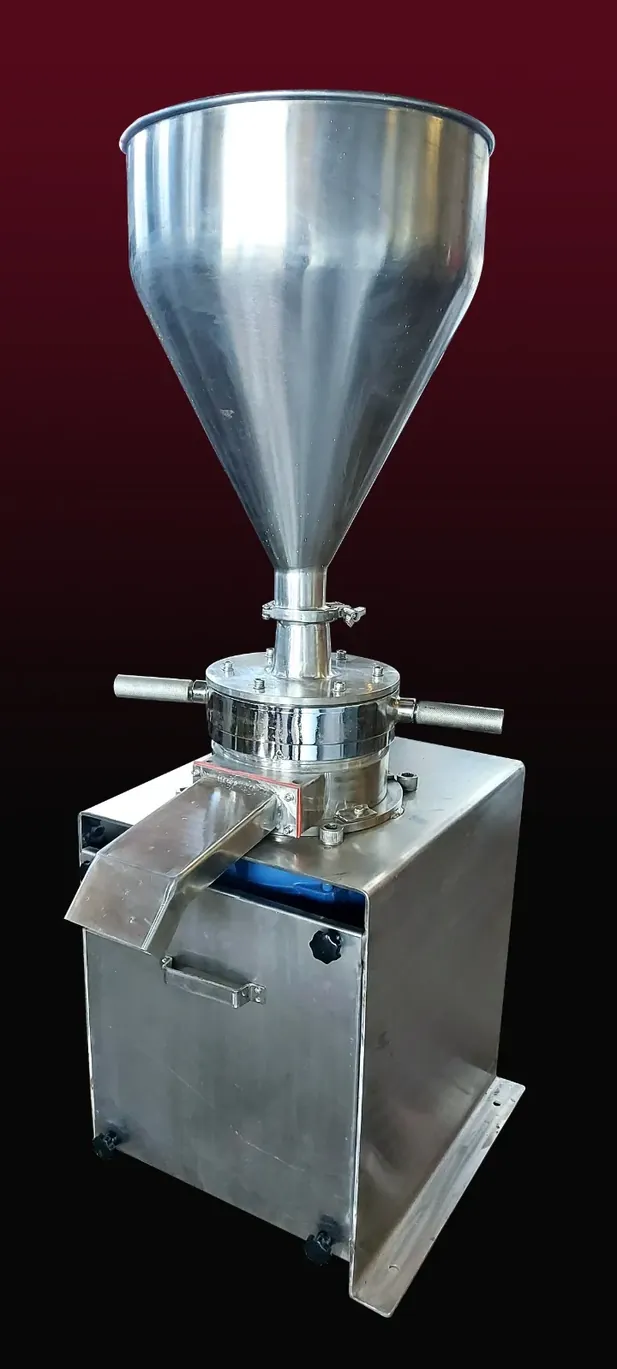
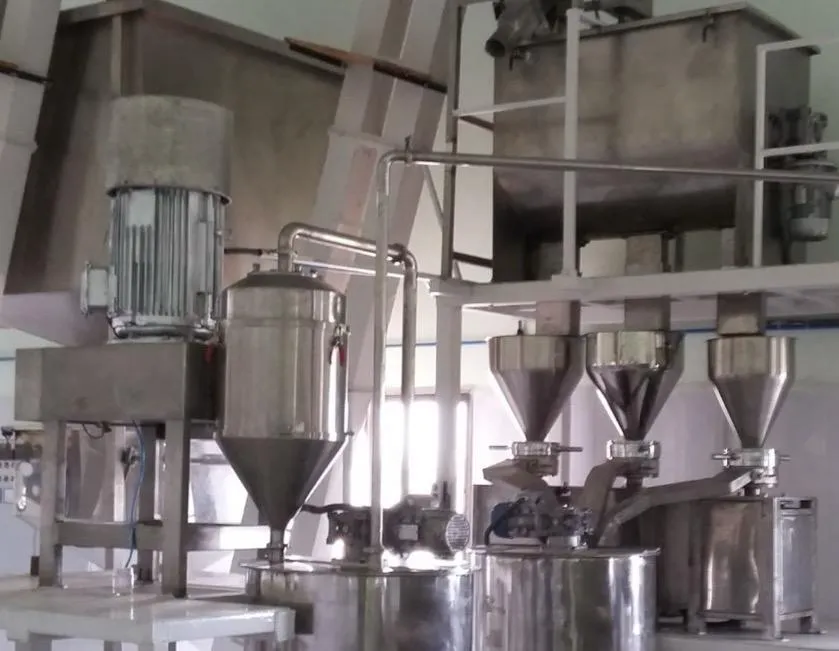
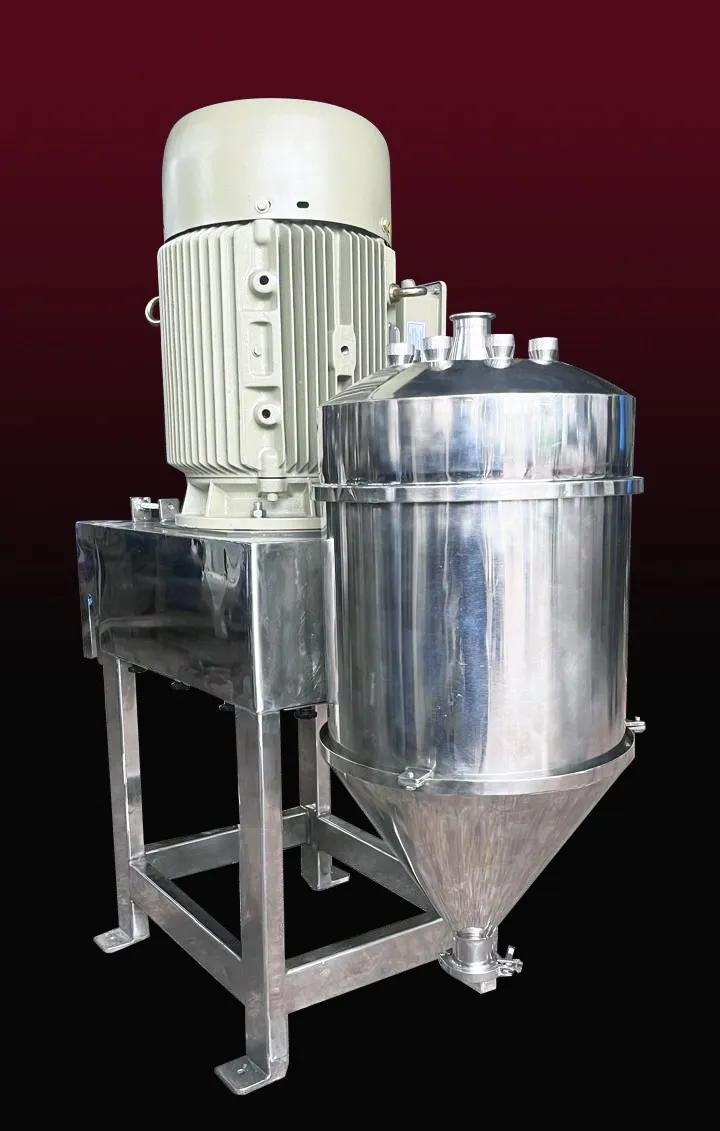
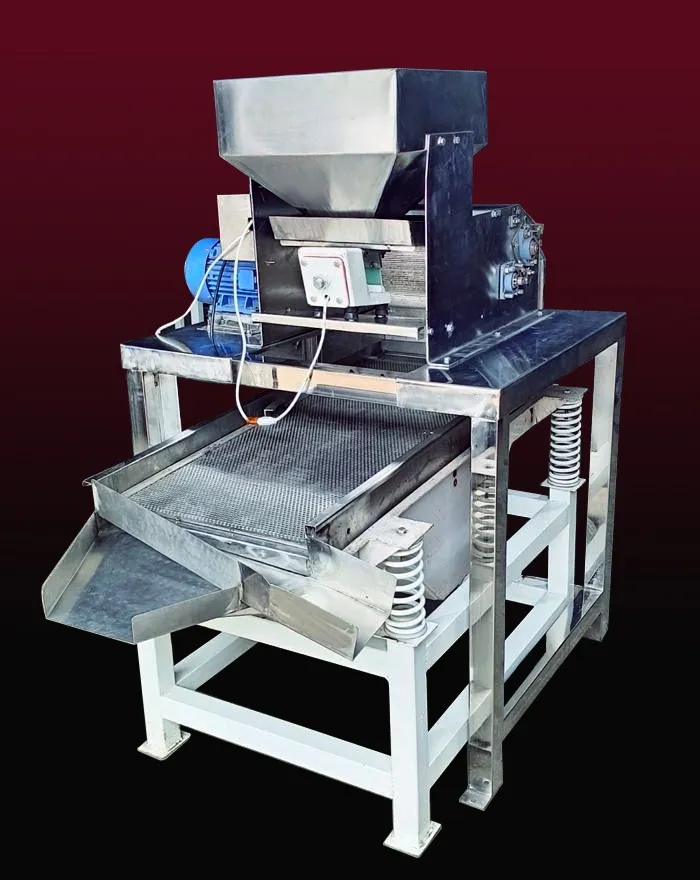
Choosing a Peanut Butter Grinder
Grinding comes after blanching and before mixing and filling. The three machines on this page do different jobs: a colloid mill turns blanched kernels into paste, a micro-cutting grinder refines paste to a finer texture, and a granulator cuts whole kernels into pieces rather than paste. A line can use one, two or all three, depending on the products it makes.
Peanut Butter Machine (PBM series)
The Peanut Butter Machine is a colloid mill: roasted, blanched peanuts pass between a rotor and stator and are ground by high-shear action. An adjustable gap sets fineness anywhere from 20 to 200 microns, so the same peanut butter grinder can make creamy or coarser, crunchy-style butter and discharge it straight to storage tanks or the filling system. The PBM50, PBM100 and PBM200 are rated at 50, 100 and 200 kg/hr with 3, 5 and 10 HP motors. Contact parts are SS304 or SS316, gap adjustment is manual or motorised depending on model, and a water cooling jacket is optional. It also grinds almonds, cashews and walnuts.
Micro Cutting Smooth Peanut Butter Grinder (MCSG series)
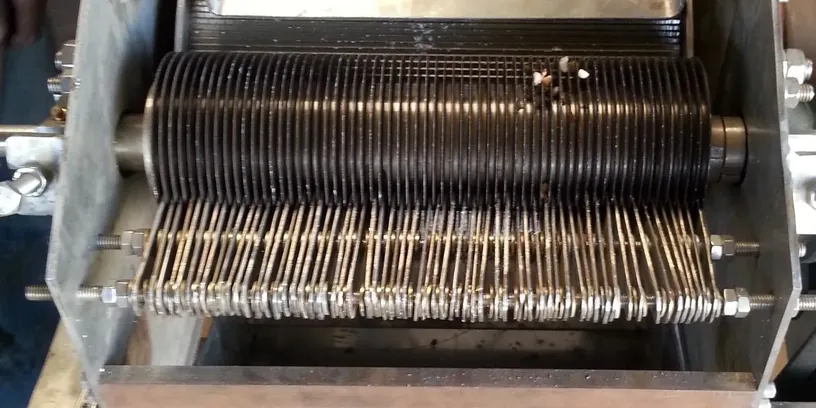
The Micro Cutting Smooth Peanut Butter Grinder uses high-speed micro-cutting blades instead of grinding stones. It takes pre-ground or coarsely crushed peanuts and refines them to 20–80 microns, with reduced oil separation for a more stable product. Speed is set by VFD, a water cooling jacket is standard, and all contact parts are mirror-polished SS316. The MCSG100, MCSG200 and MCSG500 are rated at 100, 200 and 500 kg/hr with 7.5, 15 and 30 HP motors. It is aimed at premium smooth peanut butter for retail and export markets.
Peanut Granulator Dicer (PGD series)
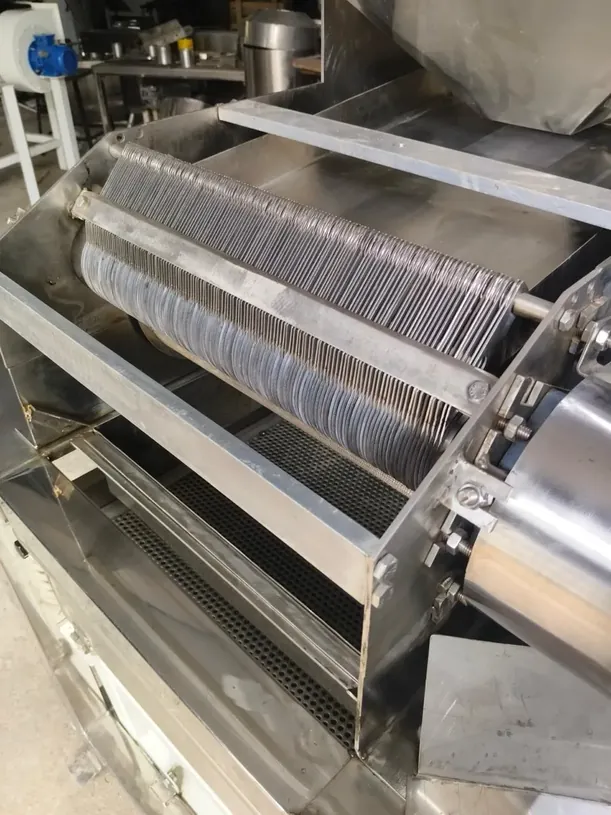
The Peanut Granulator Dicer cuts roasted or blanched whole peanuts with hardened stainless steel blades and sizes the pieces through interchangeable grid screens, from 1 mm to 10 mm. Oversized pieces are held back for further cutting, which keeps fines low. The PGD150 and PGD300 handle 150 and 300 kg/hr with 3 and 5 HP motors, run in continuous or batch mode, and have an SS304 body. Besides crunchy peanut butter, the granules suit confectionery, bakery, ice cream toppings and snack coatings, and the machine also processes almonds, cashews, walnuts and hazelnuts.
Building your grinding section
Where one machine is enough, a PBM on its own produces finished paste at up to 200 kg/hr. For a finer smooth texture, place a micro-cutting grinder after it and choose an MCSG rated at or above the PBM's output. If your specification calls for SS316 on every contact surface, note that the MCSG is SS316 throughout, the PBM is offered in SS304 or SS316, and the granulator body is SS304. When you request a quote for a peanut butter grinder, include your target output and texture so the right combination can be specified.
Grinding equipment comparison
| Machine | Job in the line | Models and capacity | Motor power | Output size | Contact material |
|---|---|---|---|---|---|
| Peanut Butter Machine | Grinding blanched peanuts into smooth or crunchy paste (colloid mill) | PBM50 / PBM100 / PBM200: 50 / 100 / 200 kg/hr | 3 / 5 / 10 HP | 20 – 200 microns (adjustable) | SS304 / SS316 |
| Micro Cutting Smooth Peanut Butter Grinder | Fine grinding of pre-ground peanuts to a smooth paste | MCSG100 / MCSG200 / MCSG500: 100 / 200 / 500 kg/hr | 7.5 / 15 / 30 HP | 20 – 80 microns | SS316 (all contact parts) |
| Peanut Granulator Dicer | Cutting whole nuts into uniform granules and diced pieces | PGD150 / PGD300: 150 / 300 kg/hr | 3 / 5 HP | 1 – 10 mm granules (screen dependent) | SS304 body; hardened stainless steel blades |
Frequently Asked Questions
Primary grinding uses a colloid mill (the PBM range) to grind roasted peanuts into a coarse paste at 50 to 80 micron particle size. Secondary grinding uses a micro-cutter to refine the paste down to 15 to 30 microns, producing the smooth texture consumers expect. Both stages are required for premium smooth peanut butter.
The Shrijee Nut Company two-stage grinding line achieves 15 to 30 micron particle size for smooth peanut butter, equivalent to international premium brands. Premium ultra-smooth variants can be tuned below 20 microns by reducing the secondary grinder gap.
Yes. The grinder produces a smooth paste base for both variants. Crunchy peanut butter requires an additional peanut granulator/dicer to produce 1.5 to 4 mm peanut granules that are blended into the smooth base at 8 to 18 percent by weight in a ribbon blender.
All grinders feature water-jacketed bodies with chilled water (12 to 18 degrees Celsius) that keep paste temperature below 65 degrees Celsius. If temperature creeps higher, the operator slows the feed rate to prevent oil separation and flavour degradation.
The PBM50 handles 30 to 50 kg per hour, the PBM100 handles 80 to 120 kg per hour, and the PBM200 handles 150 to 220 kg per hour. All models feature SS304/SS316 food-grade construction, adjustable grinding gap, and water-jacketed cooling.