Blanching Machines
Blanching Machines for
Peanut Butter Processing
Choosing a Peanut Blanching Machine
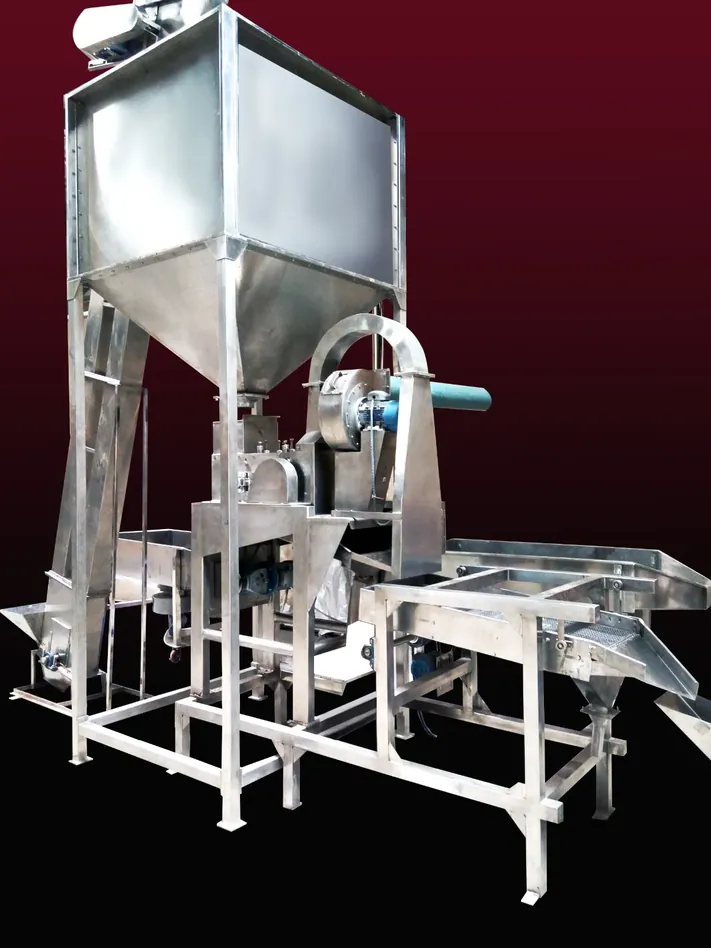
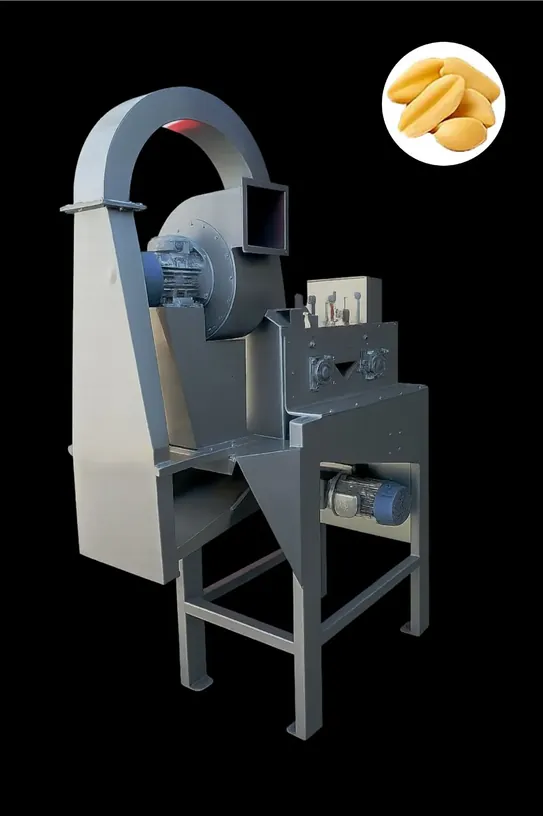
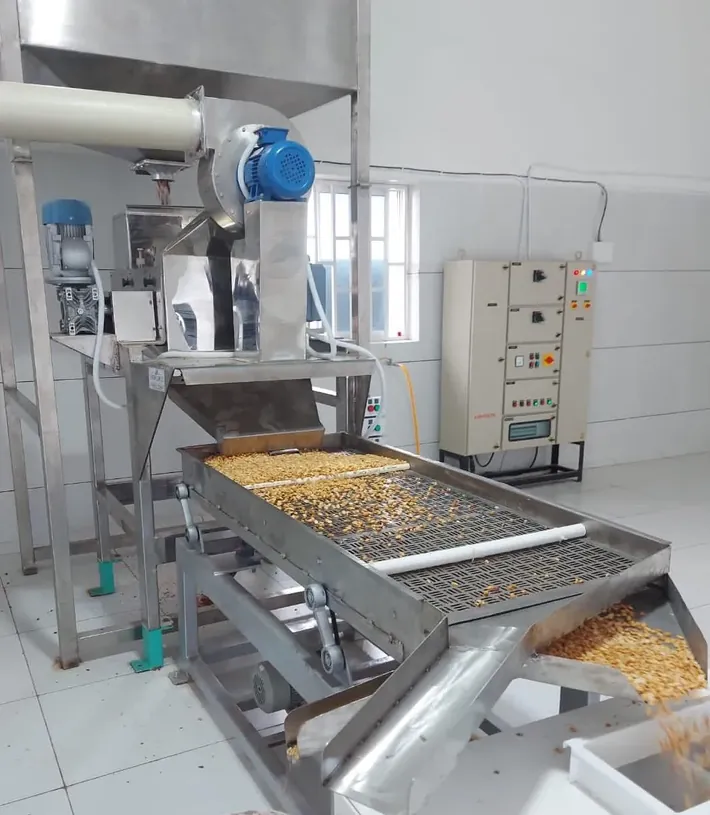
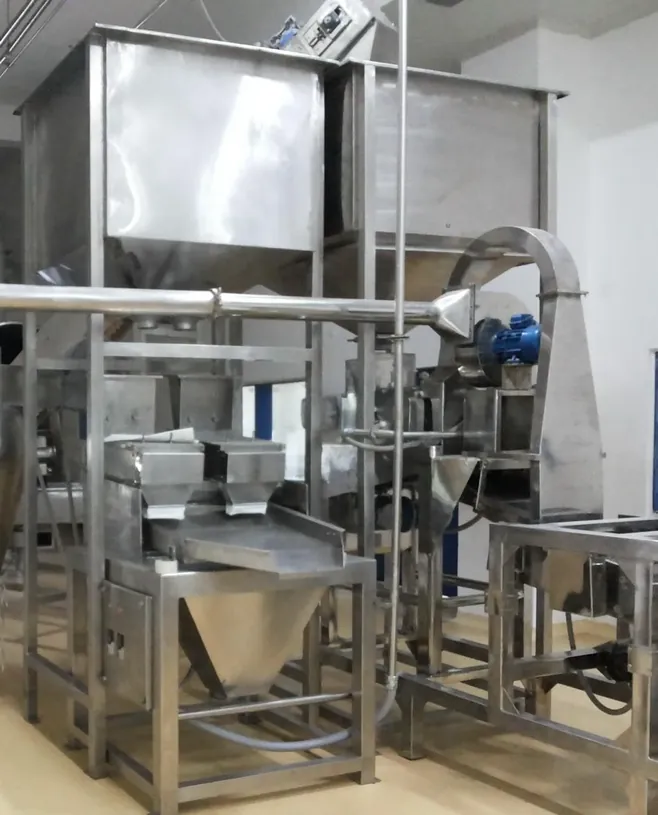
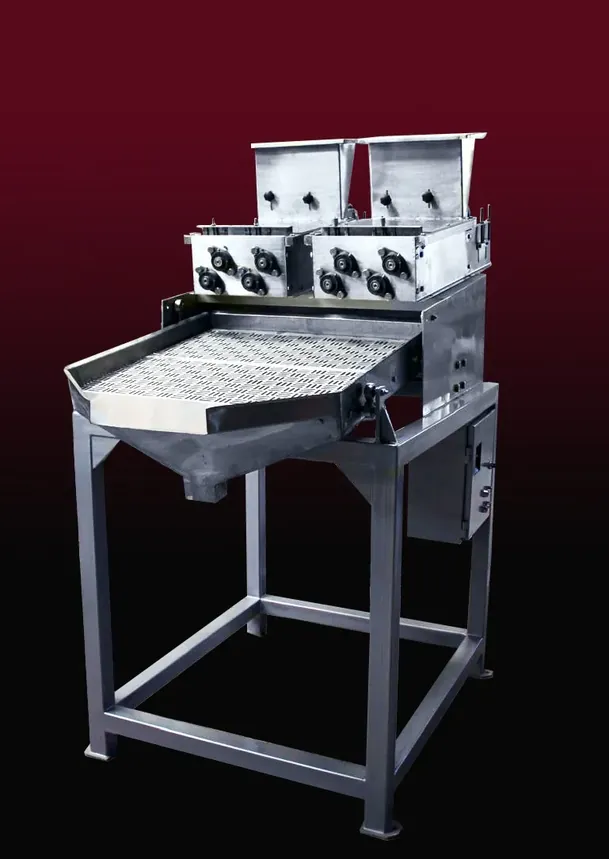
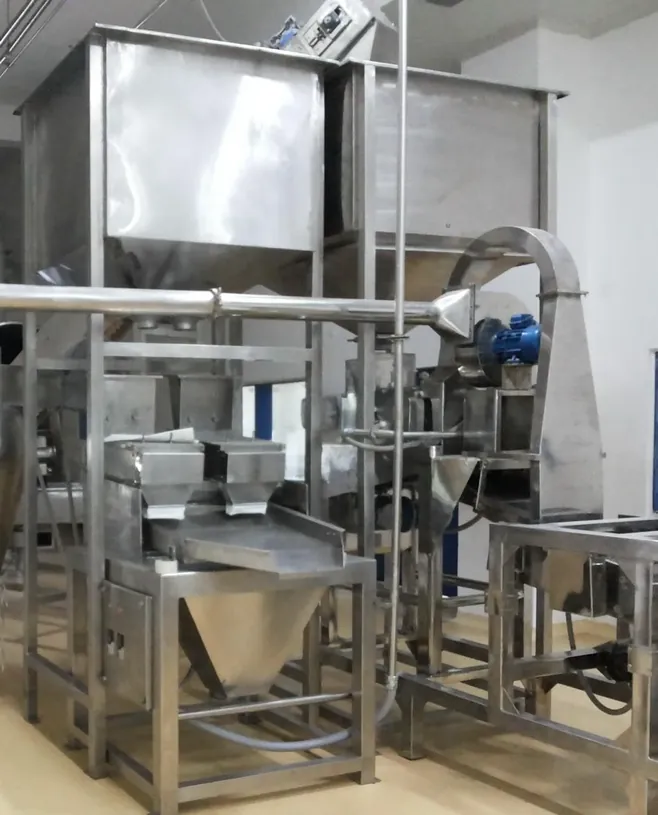
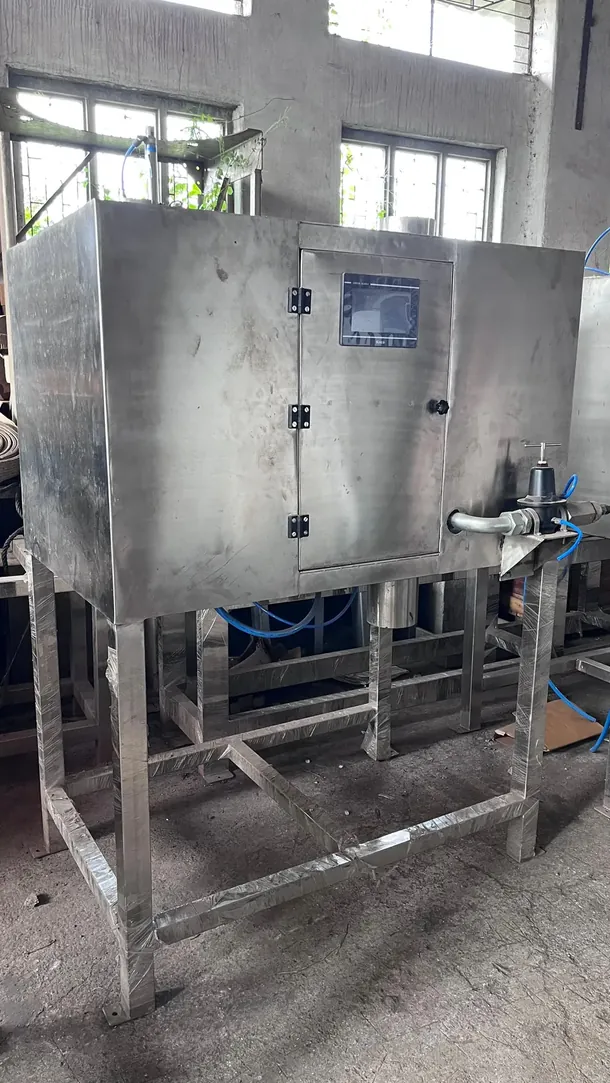
Blanching removes the thin red skin (testa) from roasted peanuts. In a peanut butter line it follows roasting and cooling: peanuts leave the roaster, are cooled on a modular cooling belt, and then pass through the blancher so that clean, skin-free kernels go forward to grinding. Shrijee Nut Company builds three types of peanut blanching machine. All three are dry processes that use no water or steam, so there is no drying step after blanching. Each one separates the loosened skin by pneumatic air aspiration, runs continuously, is built in SS304 food-grade stainless steel and is supplied prewired and factory tested.
Start with the kernel you need
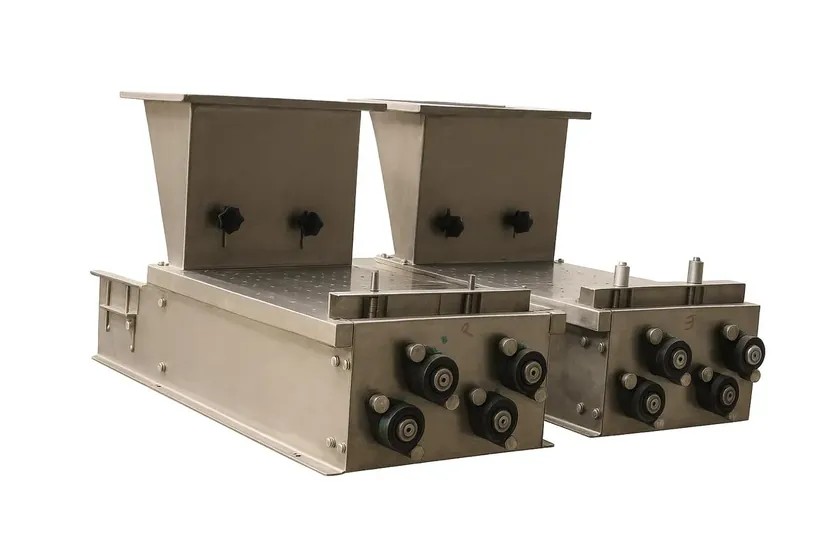
Split halves. The Peanut Split Blancher feeds roasted peanuts between counter-rotating rubber rolls that split each kernel in two and crack the skin in the same pass; aspiration then lifts the skin away. Skin removal efficiency is above 99%. Roll gap and pressure adjust for different peanut sizes, manually or by motor. Because the halves go straight to grinding, this machine fits lines where the end product is peanut butter or confectionery.
Whole kernels. The Peanut Whole Blancher uses a series of precisely set rubber and steel rollers that loosen and break the skin without cracking the kernel, followed by air aspiration. Skin removal is above 98% and the kernel stays intact, which is what snack coatings, nut bars, confectionery and export-grade whole blanched peanuts require. Roller gap and speed adjust for different cultivars and sizes.
Heated-air blanching. The Peanut Air Blancher passes peanuts through a heated air chamber, adjustable from 60°C to 120°C, so the skin shrinks and detaches before it is aspirated away. It adds no moisture, preserves the natural flavour, colour and oil content of the kernel, and removes more than 98% of the skin. It offers the largest capacities in the range, up to 2000 kg/hr, and needs a heat source, electric or gas, chosen at the time of order.
Sizing the blancher to your line
Pick a model whose rated capacity is at or above the output of the roaster that feeds it. For reference, Shrijee's RSTR150 roaster is rated at 450 kg/hr and the RSTR300 at 900 kg/hr. Motor power rises with capacity, from 2 HP on the smallest split and whole blanchers to 20 HP on the PAB2000, which is worth factoring into the electrical load of the plant. If you are unsure which peanut blanching machine suits your product, share your roaster capacity and end product when you request a quote.
Blancher model comparison
| Machine | Kernel output | Models and capacity | Motor power | Blanching method | Skin removal | Material |
|---|---|---|---|---|---|---|
| Peanut Split Blancher | Split halves | PSB300 / PSB600 / PSB1000: 300 / 600 / 1000 kg/hr | 2 / 3 / 5 HP | Dry, rubber roll splitting with pneumatic aspiration | >99% | SS304 (food grade) |
| Peanut Whole Blancher | Whole, intact kernels | PWB300 / PWB500 / PWB1000: 300 / 500 / 1000 kg/hr | 2 / 3 / 5 HP | Dry, roller type with pneumatic aspiration | >98% | SS304 (food grade) |
| Peanut Air Blancher | Skin-free kernels, no moisture added | PAB500 / PAB1000 / PAB2000: 500 / 1000 / 2000 kg/hr | 5 / 10 / 20 HP | Heated air (60°C – 120°C) with aspiration; electric or gas heat | >98% | SS304 (food grade) |
Frequently Asked Questions
A split blancher removes skin and splits the kernel into two halves, ideal for peanut butter production. A whole blancher removes skin while keeping the kernel intact, suitable for snacks and confectionery. An air blancher removes skin without water, using heated air, which preserves flavour and is preferred for premium and export-grade peanuts.
Capacities range from 100 kg per hour for small batch operations up to 1,500 kg per hour for continuous-flow plants. The most common SME setup uses 200 to 500 kg per hour blanchers matched to the upstream roaster capacity.
Skin is mechanically removed by rubber rollers or air flow, then collected via a separate conveyor or cyclone for disposal or sale as cattle feed and compost feedstock. Modern blanchers achieve 96 to 99 percent skin removal in a single pass.
Yes. Small-batch blanchers in the 50 to 150 kg per hour range are available for kitchen-scale and pilot operations. They use the same SS304 food-grade construction and skin-separation technology as larger units.
When operated correctly, blanching does not damage kernel quality. Damage typically occurs from over-roasted brittle kernels or excessive blancher speed. Shrijee Nut Company blanchers use adjustable roller pressure and speed controls to maintain kernel integrity above 97 percent.