Roasting & Thermal Systems
Roasting & Thermal Systems for
Peanut Butter Processing
Peanut Roasters and Thermal Processing Equipment
Heat treatment happens at two points in a peanut butter line. Roasting develops flavour, colour and aroma and lowers the moisture content of the raw kernel. The roasted peanuts then have to be cooled quickly before blanching, because residual heat causes oil sweating and discoloration. Later, on the paste side, viscous product may need controlled heating or cooling. The three machines on this page cover those jobs: a batch peanut roaster, a cooling belt and a scraped surface heat exchanger.
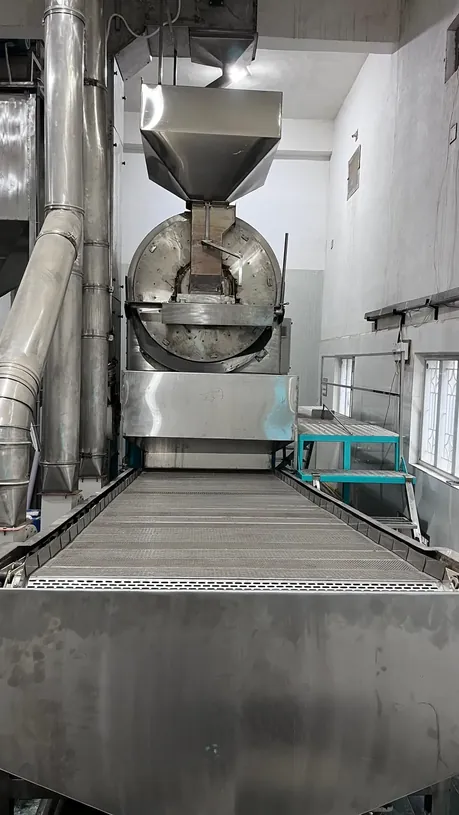
Peanut Radiant Ray Rotary Roaster
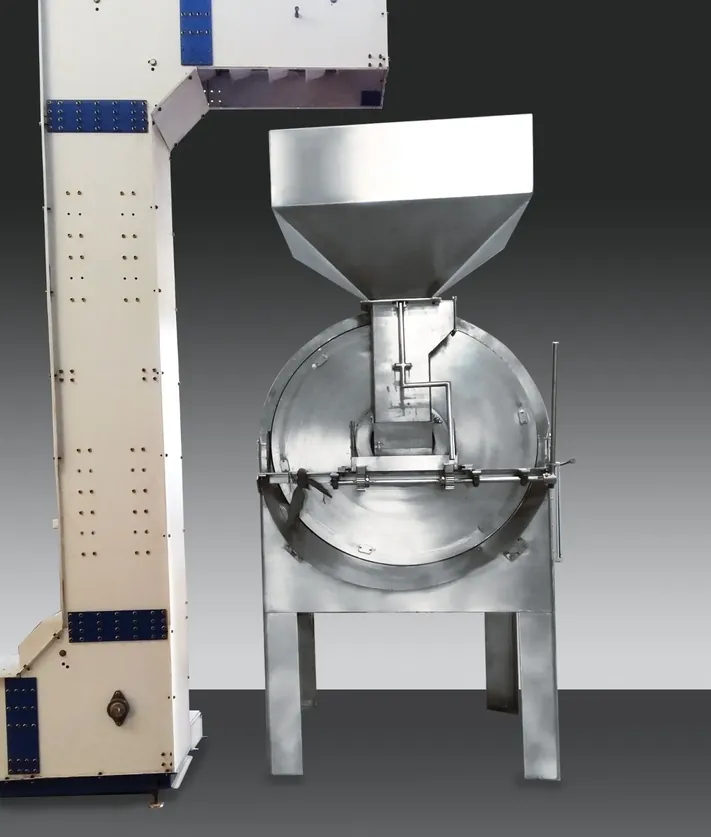
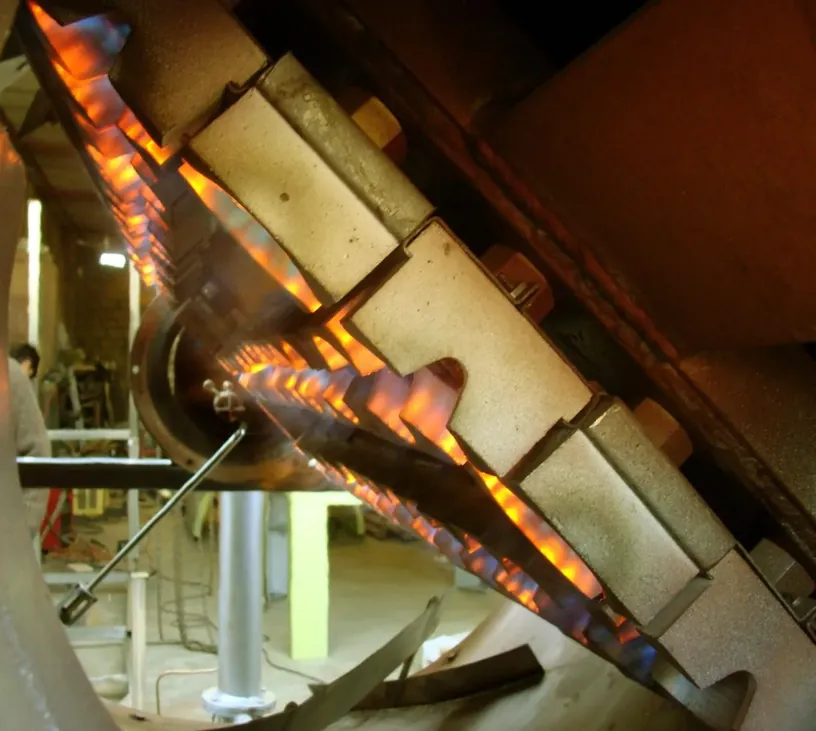
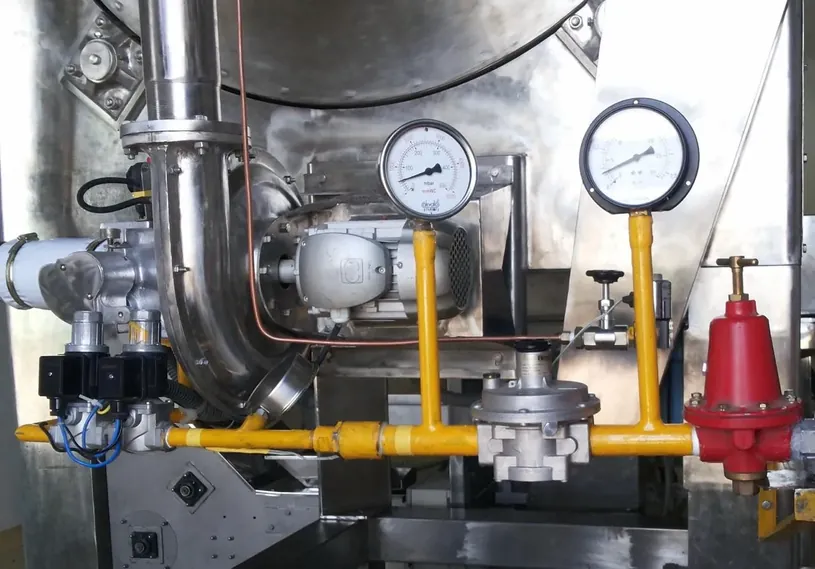
The Peanut Radiant Ray Rotary Roaster is a batch peanut roaster that uses direct infrared radiant heat, fuelled by LPG, PNG or natural gas, and needs no preheating. A surge hopper above the roaster holds the next batch while the current one roasts, and the outlet door discharges automatically, so batches run in a continuous loop. The RSTR150 is rated at 450 kg/hr and the RSTR300 at 900 kg/hr, with a batch cycle of 20 to 25 minutes (up to 3 batches per hour). It accepts product from 2 mm to 20 mm and moisture up to 14%. Temperature is controlled digitally, and a flame-out safety system cuts the fuel supply automatically if the flame fails. Buyers can choose an MS body with SS contact parts or full SS construction, and manual, semi-automatic or fully automatic operation.
Modular Cooling Belt
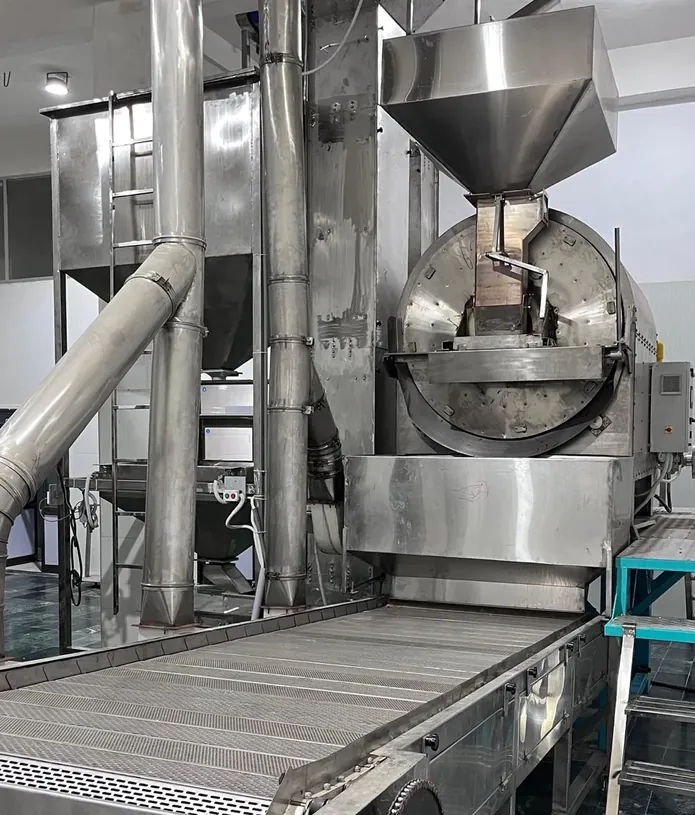
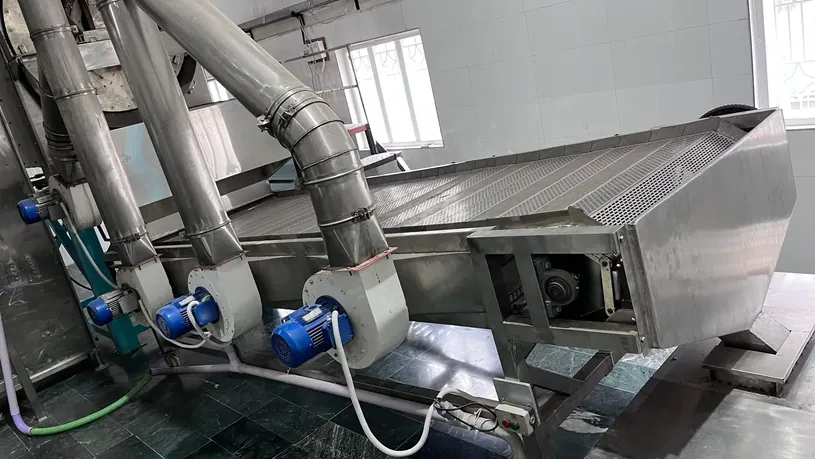
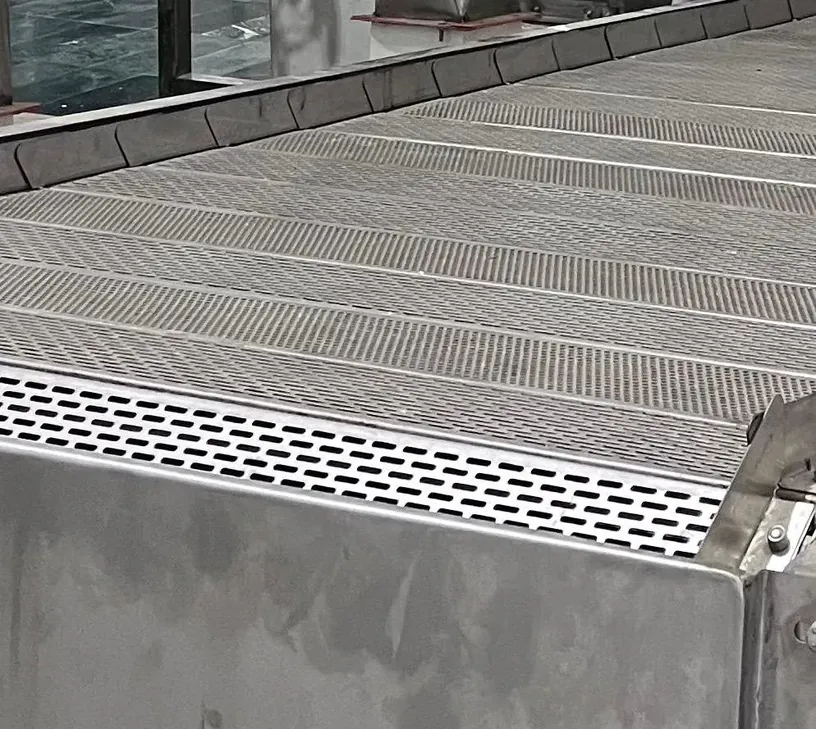
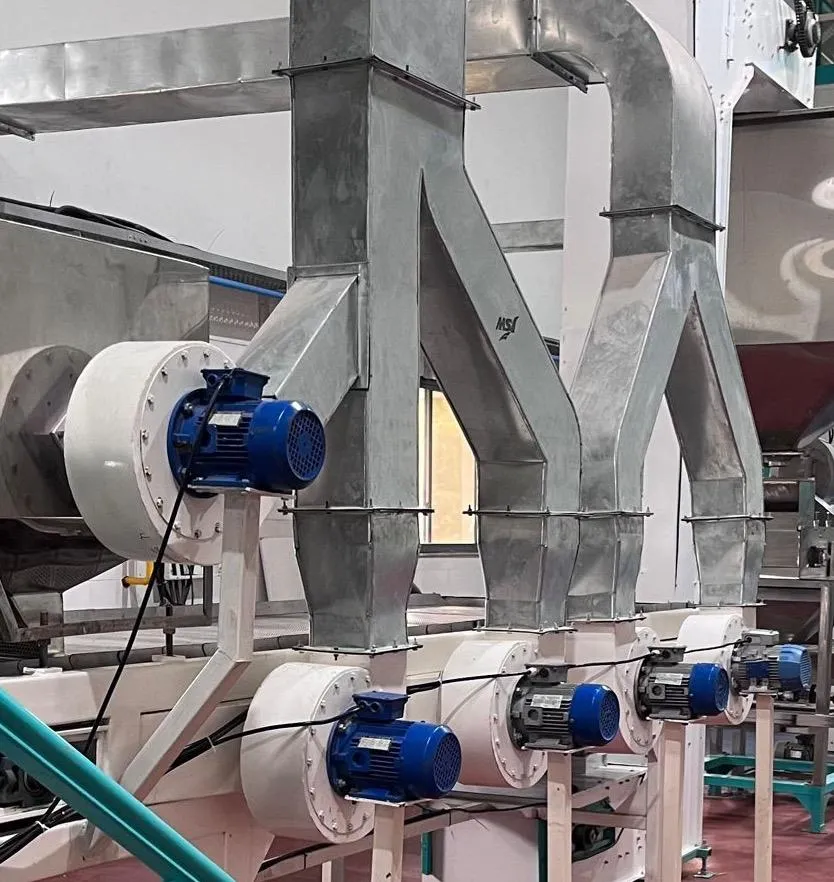
Roasted peanuts discharge from the roaster onto the Modular Cooling Belt. A blower on the feed hopper removes the first heat, then suction blowers in several zones below the perforated SS304 belt pull air through the product layer. A typical set-up is one hopper blower plus three 2 HP blowers along the cooling zone, depending on system size. Belt width runs from 600 mm to 1200 mm and length from 2.5 m to 10 m, set by throughput, so give your roaster's hourly output when you enquire. Belt sections are individually replaceable, the frame is MS powder-coated or SS304, and a VFD control panel is optional.
Scraped Surface Heat Exchanger
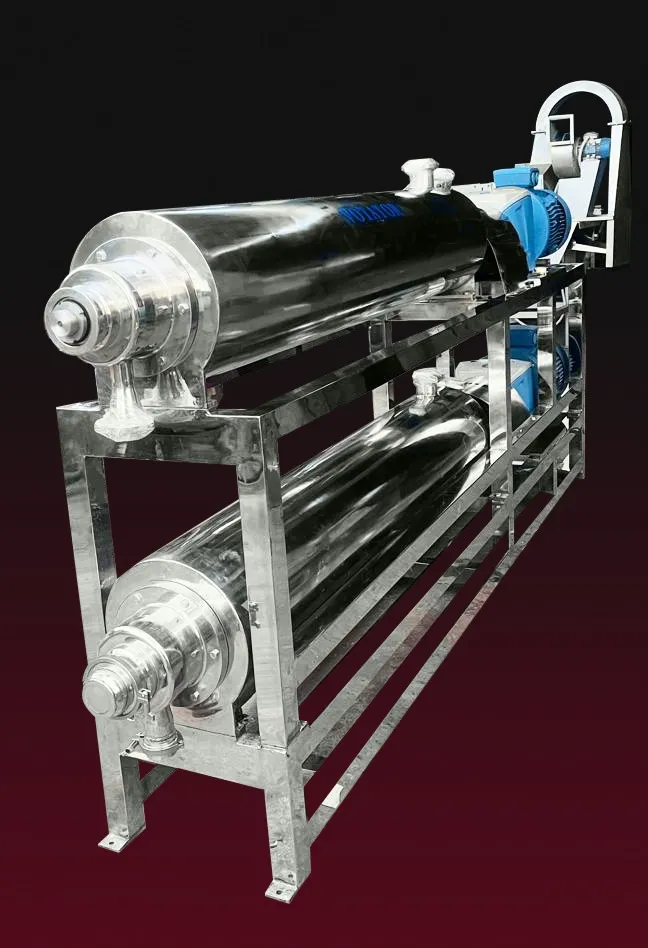
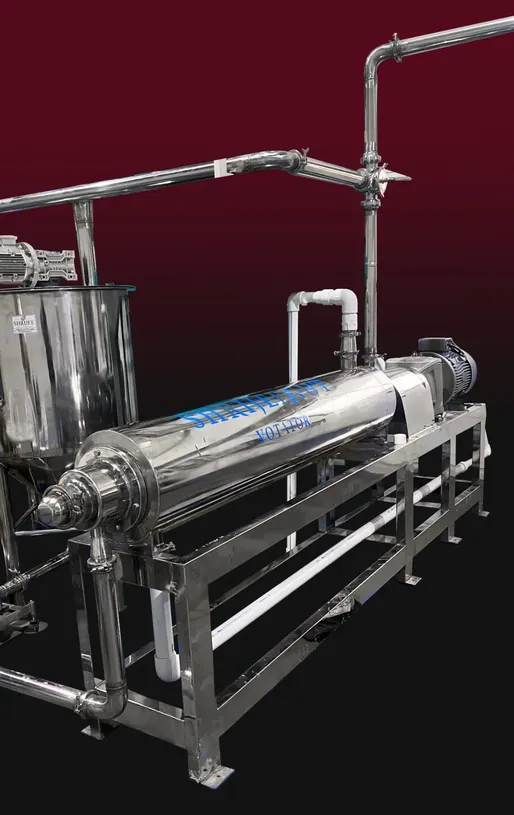
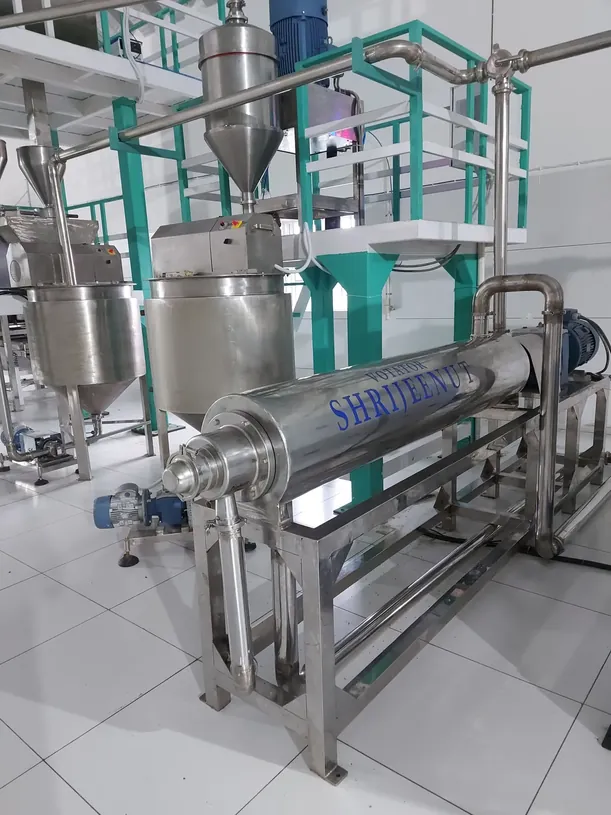
The Scraped Surface Heat Exchanger (SSHE) works on pumpable product rather than whole kernels. Rotating scraper blades, in Teflon or stainless steel, continuously clear the heat transfer surface, which prevents fouling and burn-on with thick, sticky, heat-sensitive materials such as peanut butter. It heats, cools or crystallises product between -40°C and 150°C at up to 10 bar, using steam, water, glycol or refrigerant, and it is CIP-compatible. Capacity is specified in litres per hour, from 50 to 10,000 LPH, with horizontal or vertical orientation and single-wall, double-wall or insulated construction.
Thermal equipment comparison
| Machine | Role in the line | Capacity | Key specification | Construction |
|---|---|---|---|---|
| Peanut Radiant Ray Rotary Roaster | Batch roasting of peanuts, nuts, seeds and spices | 450 kg/hr (RSTR150) / 900 kg/hr (RSTR300) | Direct infrared radiant heating; 20 – 25 minute batch cycle; LPG / PNG / natural gas | MS body with SS contact parts / full SS |
| Modular Cooling Belt | Cooling of roasted product before blanching, grinding or packing | Belt width 600 – 1200 mm, length 2.5 – 10 m (sized to throughput) | Hopper blower plus multi-zone suction blowers; optional VFD panel | SS304 modular belt; MS powder-coated or SS304 structure |
| Scraped Surface Heat Exchanger | Heating, cooling or crystallisation of viscous products | 50 – 10,000 LPH (customisable) | -40°C to 150°C; up to 10 bar; CIP-compatible | SS304 / SS316 |
Frequently Asked Questions
A radiant ray rotary roaster combines infrared (radiant) heat transfer with mechanical rotation. Peanuts tumble inside a rotating drum while infrared emitters transmit heat by radiation rather than direct contact, producing more uniform roasting than traditional drum or hot-air roasters with temperature uniformity within plus or minus 2 degrees Celsius across the batch.
Shrijee Nut Company supplies radiant ray rotary roasters in 100 kg, 200 kg, 300 kg and 500 kg per batch capacities. With a typical 30 to 35 minute roasting cycle, a 200 kg per batch roaster delivers approximately 350 to 400 kg per hour of finished roasted peanuts.
Yes. The same machine roasts almonds, cashews, pistachios, hazelnuts and sunflower seeds with adjusted temperature and time profiles. Sesame and quinoa roasting also works well at lower temperatures of 130 to 150 degrees Celsius.
Drum roasters rely on contact conduction from a hot drum wall, which can scorch peanuts touching the surface. Radiant ray roasters use infrared radiation that penetrates each kernel evenly and tumbles the bed for uniformity. Radiant ray also reduces energy use by 15 to 25 percent and produces 2 to 3 percentage points higher yield post-blanching.
A modular cooling belt is supplied as standard or as an integrated option. Hot peanuts discharged from the roaster pass over a perforated conveyor with forced ambient air, dropping kernel temperature below 35 degrees Celsius within 4 to 6 minutes to lock in the targeted flavour profile.