Peanut Butter Machine Manufacturer in South Africa
Complete peanut butter processing machinery for South African food manufacturers — roasters, blanchers, grinders and filling systems in food-grade stainless steel, engineered for 400V 50Hz supply and shipped to Durban, Cape Town and Gqeberha.
- Power
- 400V 3-phase, 50Hz — no conversion
- Capacity
- 100 – 1,000+ kg/day
- Construction
- SS304 standard, SS316 optional
- Ports Served
- Durban, Cape Town, Gqeberha
- Sea Transit
- ~18 – 28 days from Mundra
- Build Time
- 2 – 4 weeks before dispatch
Peanut Butter Machines
for South Africa
South Africa is the most developed peanut butter market on the continent. It is a mainstream grocery category rather than an emerging one, with established national brands, a demanding retail sector and consumers who read labels — which sets a higher bar on consistency than most markets a new processor will have seen. The crop is grown domestically across the North West, Free State and Limpopo.
We have exported machinery to South Africa from our works at Jam Kandorna in Rajkot, Gujarat, with more than 500 machine installations and over 100 turnkey plant projects delivered since 2004. Shipping runs to Durban, Cape Town or Gqeberha, with the full export documentation set provided at the time of import.
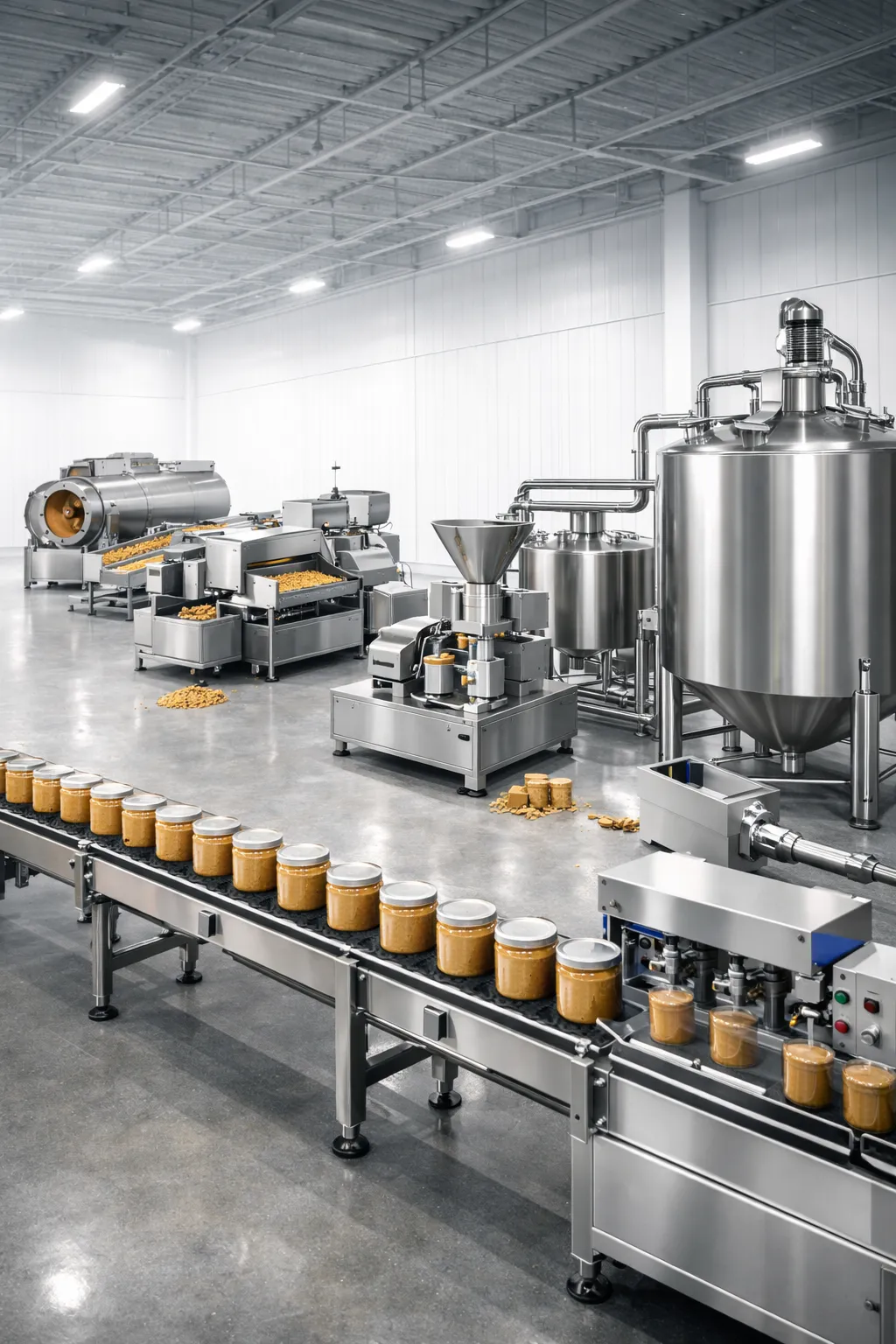
From Raw Groundnut to Filled Jar
Order the full sequence as one integrated package, or individual machines to fill gaps in an existing setup.
Every Machine We Manufacture
Twenty machines across six categories — supplied individually or as a fully integrated line.
Choose Capacity for Your Market
Over-specifying is the most common and most expensive mistake we see. Buy for the demand you can prove, not the demand you hope for.
Starter Line
100–150 kg/dayArtisanal or health-brand producer serving farm stalls, delis and online.
- Compact roaster
- Single-stage grinding
- Semi-automatic filling
- Minimal floor space
Growth Line
300–500 kg/dayBrand entering national retail chains and regional distribution.
- Rotary roaster and cooling belt
- Blanching stage included
- Two-stage grinding
- Automatic filling
Industrial Line
1,000+ kg/dayContract or private-label manufacturer supplying retailer own-brands.
- Continuous roasting
- Automated blanching
- In-line filling and labelling
- Bulk storage tanks
South African retail is won on consistency, not price. The chains here list on reliability of supply and batch-to-batch sameness, and delisting is quick. That argues for two-stage grinding and controlled roast profiling from the start rather than economising and upgrading after the first complaint. See our plant investment guide and automation comparison.
Four Engineering Reasons,
Not Marketing Claims
Electrical Compatibility
South Africa runs 50Hz supply with 400V three-phase distribution — the same frequency as India and inside the tolerance band of our standard motors and control gear. No frequency conversion, no rewind, unlike machinery built for 60Hz markets.
Load-Shedding Ready
Scheduled supply interruptions are a routine operating reality here. We fit soft or star-delta starters on the heavy grinding motors to cut the inrush current that trips generator sets, and issue a connected-load schedule so backup can be sized properly rather than guessed.
Retail-Grade Consistency
Two-stage grinding and controlled roast profiling are what hold texture and colour steady across production runs. In a market where chain listings depend on sameness, that is the specification decision that matters most.
Repairable On Site
Standard-section stainless fabrication, common bearing sizes and widely available motor frames mean a competent local millwright can maintain the line. South Africa has the engineering base to support that properly.
Importing Machinery into South Africa
We handle manufacture, pre-dispatch testing, export packing and documentation. Everything on the South African side is handled by your licensed clearing agent.
Proforma Invoice
We issue a proforma invoice covering the machine list, specification and terms, which your bank and clearing agent work from.
Documentation Pack
We prepare the export documentation set and supply anything further your clearing agent asks for.
Manufacture & Testing
Two to four weeks depending on the configuration ordered, with pre-dispatch testing.
Sea Freight
Mundra or Nhava Sheva to Durban, Cape Town or Gqeberha, roughly 18–28 days port to port.
Clearance & Delivery
Your licensed clearing agent handles customs formalities, then road transport to site.
Confirm every import requirement with your licensed clearing agent. Conformity assessment, permits and product registration differ by consignment and are revised periodically, so your agent in South Africa is the authority on what your shipment actually needs. This page is not a compliance reference and we do not advise on it.
Whatever documentation they ask for, we provide. At the time of import we prepare and supply the full set on our side — commercial invoice, packing list, bill of lading, certificate of origin, technical specifications, test records and any further paperwork your agent or the authorities require.
Specified for South African
Operating Conditions
Power continuity is the defining engineering constraint here, and it should shape the specification rather than be worked around afterwards.
Built for Interrupted Supply
Soft or star-delta starters on higher-rated grinding motors cut the inrush current that trips generator sets on restart. The connected-load schedule ships with every quotation so your electrician can size the genset and changeover for scheduled outages, not just for normal running.
Clean Restart Procedure
A line that stops mid-batch with product in the mill needs a defined restart, not improvisation. We cover that explicitly in operator training, because in this market it is a weekly routine rather than an emergency.
Locally Maintainable
Common bearing sizes, standard motor frames and straightforward stainless fabrication mean routine maintenance stays with your local millwright. A recommended spares list ships with the order so wear parts are on the shelf before they are needed.
Groundnut Sourcing in South Africa
South Africa grows its own groundnut, concentrated in the North West province, the Free State and parts of Limpopo, with imports filling gaps in shorter seasons. Domestic supply means shorter inbound haul than most African markets, but seasonal variation still needs managing.
- Season-to-season variation is the thing to plan for. Agree grade and moisture specifications with your supplier rather than buying on availability, or expect to re-profile the roaster each season.
- Blended domestic and imported lots need tighter screening. If you fill gaps with imports, intake grading is what keeps the finished product consistent across the switch.
- Aflatoxin management starts at intake, not at grinding. Keep the sorting table and vibratory sieve in the machine list — rejecting kernels at intake is far cheaper than a failure on finished stock in a retail supply chain.
- Retail supply demands traceability. Documented batch records are increasingly a listing condition with the national chains, so design intake and storage with that in mind.
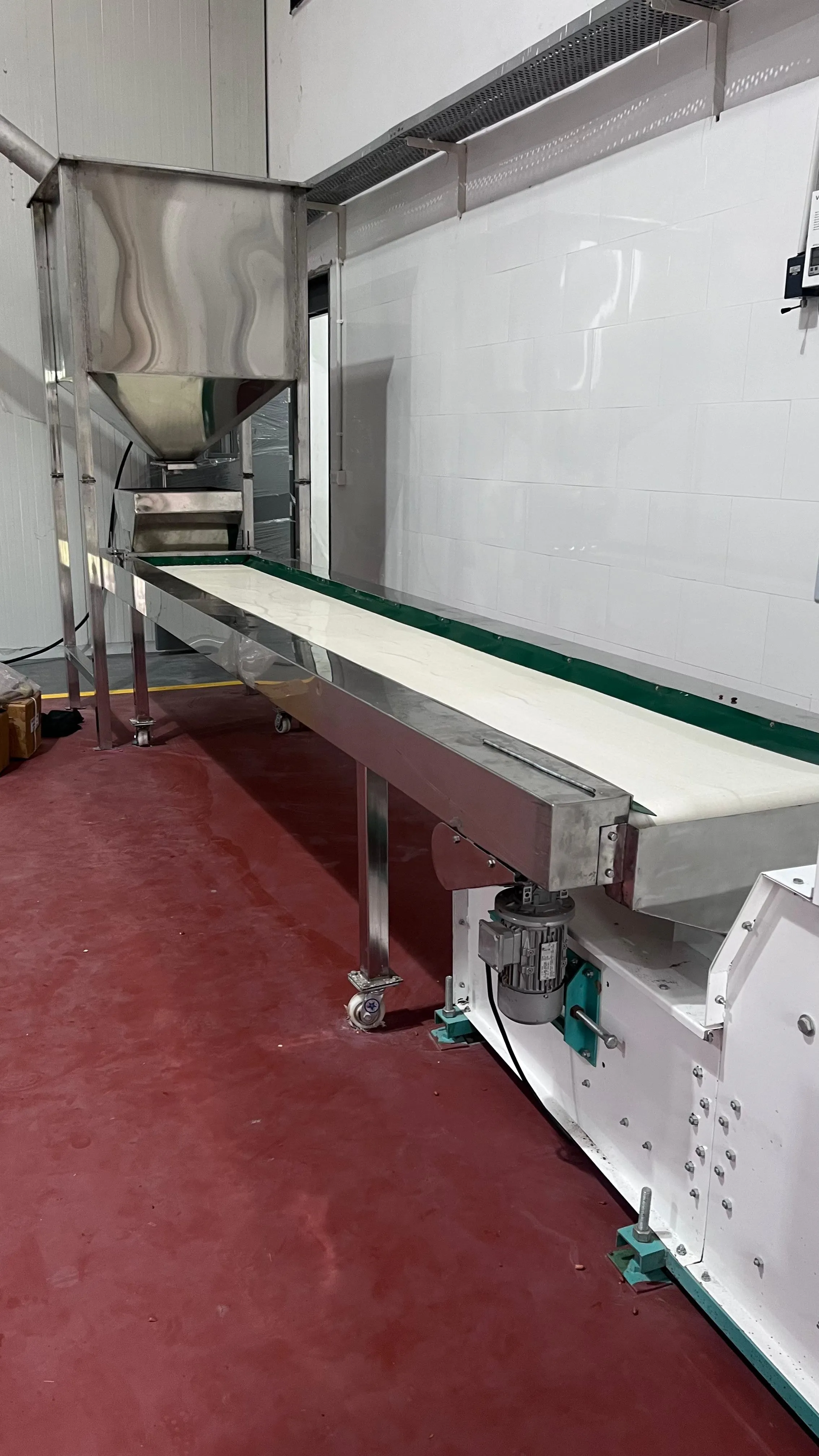
Installation, Commissioning
& Operator Training
Before Shipment
You receive general-arrangement layout drawings, foundation details, utility and connected-load schedules, and a full operating and maintenance manual — so your civil and electrical work can be finished before the machines arrive.
On Site
Commissioning support and operator training covering roast profiling, grinder gap setting, cleaning routines and preventive maintenance. Engineer deputation is quoted separately — travel, visa and per-diem are additional. Where an on-site visit is not practical we run remote commissioning over video call, and we will tell you plainly at quotation stage which approach suits your line.
Peanut Butter Machines in South Africa
Yes — South Africa is one of our established export markets. We manufacture in Rajkot, Gujarat and ship on FOB or CIF terms through Mundra and Nhava Sheva to Durban, Cape Town or Gqeberha, roughly 18 to 28 days port to port. We supply the full export documentation set at the time of import.
They are specified with it in mind. Soft or star-delta starters on higher-rated grinding motors cut the inrush current that trips generator sets on restart, and we issue a connected-load schedule with every quotation so your generator and changeover can be sized for scheduled outages rather than estimated. Operator training covers clean restart with product in the mill, because here that is a weekly routine.
Yes. South Africa runs 50Hz supply with 400V three-phase distribution and 230V single phase. India uses 415V three-phase at the same frequency, which sits inside the tolerance band of our standard motors and control gear — no frequency conversion or rewind required.
Ask your licensed clearing agent — they are the authority on this, and we deliberately do not advise on it. Conformity assessment, import permits and food-product registration differ by consignment and are revised periodically, so anything we published here could be out of date by the time you ship. What we do commit to is the paperwork on our side: at the time of import we prepare and provide the full documentation set, including the commercial invoice, packing list, bill of lading, certificate of origin, technical specifications and test records, plus any further documents your agent or the authorities request.
It depends entirely on channel. Artisanal and health-brand producers serving farm stalls, delis and online typically start at 100 to 150 kg per day. Anyone targeting the national retail chains should plan for 500 to 1,000 kg per day with two-stage grinding and automatic filling, because those listings depend on consistent supply and batch-to-batch sameness rather than volume alone.
Domestically for the most part — the North West province, the Free State and parts of Limpopo — with imports filling gaps in shorter seasons. That is a shorter inbound haul than most African markets, but seasonal variation still needs managing through agreed grade and moisture specifications rather than buying on availability.
We provide layout drawings, foundation and utility details before shipment, and commissioning support with operator training on site — including restart procedure after a supply interruption. Engineer deputation is arranged case by case and quoted separately, covering travel, visa and per-diem. Remote commissioning over video is available where a visit is not practical.
Yes, and for retail supply it is usually the right choice. Batch consistency depends on the stages being matched to each other rather than assembled from separate suppliers, and a complete line gives you one layout, one commissioning visit and one party accountable. See our turnkey peanut butter plant page for the full scope.
Planning a Peanut Butter Plant in South Africa?
Tell us your target output in kilograms per day, your packaging format, whether you need smooth, crunchy or both, and your backup power arrangement. We will come back with a machine list, a layout drawing and a firm price.